
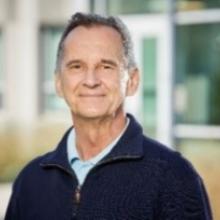
Harry Martz is the Director for Non-destructive Characterization Institute and a distinguished member of the technical staff at Lawrence Livermore National Laboratory and is a Professor of Practice at the University of California San Diego. Harry is leading a team of scientists and engineers to research, develop and apply nondestructive characterization methods to better understand material properties and inspection of components and assemblies. He has applied x-ray CT to inspect millimeter sized laser targets, automobile and aircraft components, high explosives, explosive shaped charges, concrete, and non-destructive radioactive assay of waste drum contents. Recent R&D efforts include CT imaging for conventional and homemade explosives detection in luggage and radiographic imaging of cargo to detect special nuclear materials and radiological dispersal devices. Dr. Martz has authored or co-authored over 300 papers. Harry and colleagues published a book on X-ray Imaging: Fundamentals, Industrial Techniques and Applications. He has also served on several National Academy of Sciences Committees on Aviation Security and was the Chair of the Committee on Airport Passenger Screening: Backscatter X-Ray Machines. Harry has been co-chair of the Awareness and Localization of Explosives-Related Threats, Advanced Development for Security Applications Workshops. Harry received an R&D Magazine 100 Award for his work on a mobile CT system to nondestructively assay waste drums at Department of Energy sites around the country. He received his M.S. and Ph.D. in Nuclear Physics/Inorganic Chemistry from Florida State University, and his B.S. in Chemistry with a physics minor from Siena Collage.
Lawrence Livermore National Laboratory (LLNL), as part of the Department of Energy’s (DOE) network of 17 national laboratories, advances science and technology in support of the DOE’s core mission. LLNL’s “Science on a Mission” approach drives innovation across national security, energy, and fundamental research. The Nondestructive Characterization Institute (NCI) at LLNL exemplifies this mission by researching, developing and applying advanced nondestructive characterization (NDC) techniques. These capabilities enable the analysis of materials and components without altering their structure, supporting critical applications in nuclear security and energy. Integrating Artificial Intelligence and Machine Learning (AI/ML) into NDC workflows enhances data analysis, increases efficiency, and opens new possibilities for automated, high-throughput characterization. This presentation will highlight LLNL’s leadership in NDC, discuss the transformative impact of AI/ML on characterization science, and explore future directions for the adoption of these technologies within the DOE research ecosystem.